
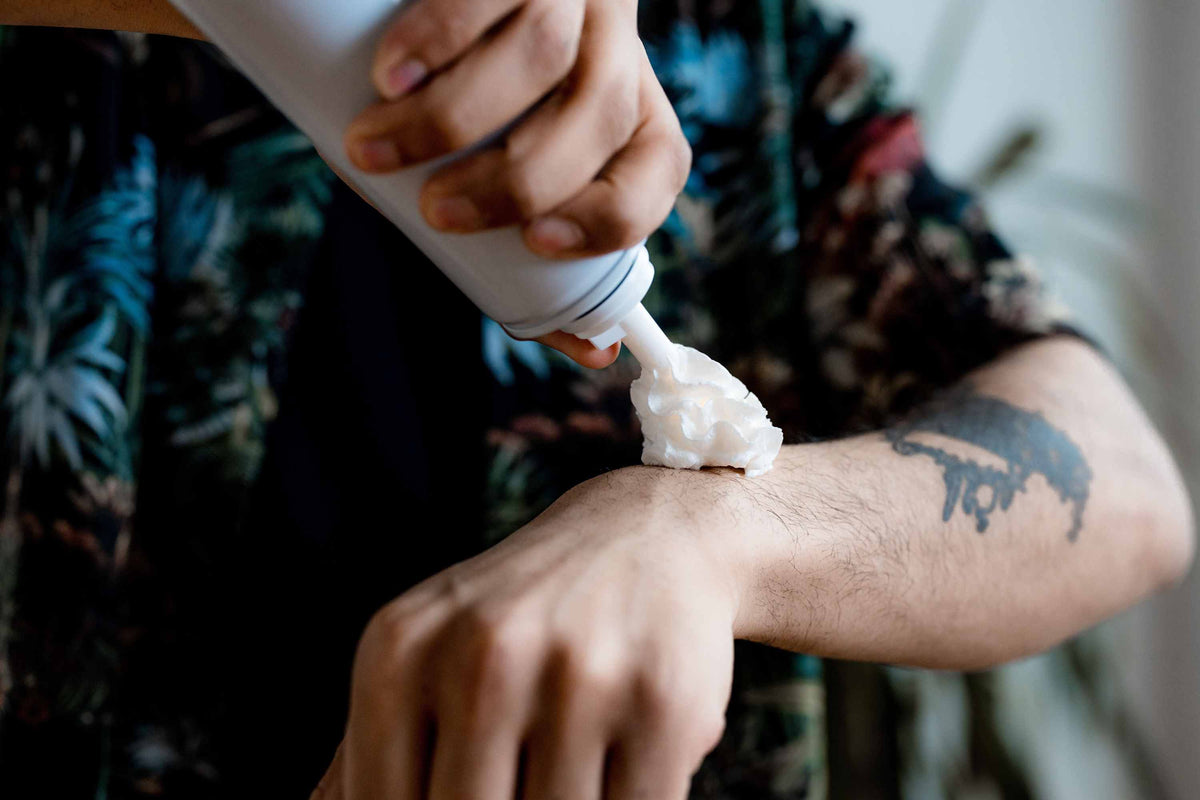
Minoxidil foam is the more popular formulation in the hair loss community, and it comes down to a number of factors: you don’t get facial runoff, you don’t walk around with greasy hair, the foam formula dries up fast, and it’s gentler on the skin. Yet many people are still skeptical whether it gets the job done the same way as the liquid.
Here, we’re covering all things foam minoxidil. We’ll be looking into what the research says about the foam formula, whether it’s effective, the timeline to see the first results, pros and cons, and so forth.
Quick answer
Yes, for most men. In the main 16-week trial, 5% foam raised hair count by 13.4% vs. 3.4% on placebo. Give it four months of twice-daily use before you judge it.
Key Takeaways
- In the main foam minoxidil trial, men on 5% foam gained about 13% more hairs in 16 weeks, versus about 3% on placebo.
- Give foam minoxidil four months to see tangible results.
- 20%–30% of users experience hair shedding known as the “dread shed” period when they’re just starting on minoxidil.
- Foam and Liquid minoxidil are equally effective for hair regrowth. However, it is possible that the liquid form has “better absorption because of the epidermal disturbance due to contact dermatitis.” Further testing is needed.
- For a hassle-free application, the Rootique DUO minoxidil applicator turns liquid into a fine mist that absorbs up to 3.5x better than a standard dropper.
- Make sure to talk to your doctor before adding minoxidil to your routine.
Does Minoxidil Foam Work? What the Research Says
Minoxidil foam made it onto US shelves thanks to the massive success of just one major study. Researchers gave 352 men (aged 18 to 49) either 5% minoxidil foam or a placebo foam twice a day for 16 weeks, with both the participants and the researchers completely in the dark about who got the real thing.
By week 16, the foam group had a 13.4% increase in hair count in the target area, versus 3.4% on placebo, and about 70.6% of the men on foam felt their hair loss had improved. Better yet, stinging and itching showed up at about the same rate in both groups.
The main foam trial
5% minoxidil foam vs. placebo foam
Men
352
aged 18 to 49
Length
16 weeks
twice a day
Design
Blinded
neither men nor researchers knew who got which
Compared
Foam
5% minoxidil vs. placebo foam
Increase in hair count in the target area
5% foam
Placebo
Felt their hair had improved
~70.6%
of the men on foam, by week 16
Stinging and itching showed up at about the same rate in both groups.
Source: the 16-week, 352-man trial linked in this article (PubMed 17761356).
The Pros and Cons of Minoxidil Foam
Pros:
And as for other benefits, foam minoxidil dries much faster and isn’t greasy. You won’t have to deal with facial runoff or liquid dripping down your forehead. It’s also much gentler on sensitive skin; since the foam is formulated without propylene glycol (the harsh chemical ingredient in the liquid that usually triggers irritation), it's by far the safer choice if you’re prone to contact dermatitis.
Cons:
When it comes to drawbacks, there are a couple to consider. For example, the foam is more expensive than the liquid, so you should expect to spend more on it in the long run. There’s also some speculation in hair loss communities that it doesn't absorb quite as deeply as the liquid, though further clinical testing is needed to confirm this. Still, because it’s so clean and convenient, foam remains the more popular choice between the two.
Foam at a glance
The pros and cons of minoxidil foam
Pros
Dries much faster and isn't greasy
No facial runoff or liquid dripping down your forehead
Gentler on sensitive skin: made without propylene glycol
The safer choice if you're prone to contact dermatitis
Cons
Costs more than the liquid, so expect to spend more over time
May not absorb as deeply as the liquid. That's community speculation; more clinical testing is needed
Clean and convenient: foam remains the more popular of the two
When Can Minoxidil Foam Be Ineffective?
Some men just don't respond, and it isn't their fault. Minoxidil has to be switched on by a scalp enzyme called sulfotransferase, and men who make little of it get little out of the drug. One analysis puts it at roughly 40% of patients who will regrow hair on 5% topical minoxidil. Plenty of others hold steady, and some see nothing.
The label also rules out men the foam wasn't built for. Skip it, or see a doctor first, if your hair loss is sudden or patchy, you have no family history of it, or you don't know the cause. Those patterns can point to temporary stress shedding (a.k.a. telogen effluvium). With heart disease, the label says to ask a doctor before use.
When foam may not work
Not every scalp responds the same way
Why some men don't respond
Minoxidil has to be switched on by a scalp enzyme
That enzyme is sulfotransferase. Men who make little of it get little out of the drug.
~40%
see new growth on 5% topical minoxidil, by one analysis. Plenty of others hold steady.
Skip it or see a doctor first if
Your shedding is sudden or patchy
There's no family history of it
You don't know the cause (it could be temporary stress shedding)
You have heart disease: the label says to ask a doctor before use
Based on the analysis and the product label linked in this article.
Is Minoxidil Foam More Effective than Liquid?
When it comes to minoxidil liquid vs. foam, clinical research shows that both formulations are equally effective. Yet minoxidil, whether foam or liquid, works on follicles that are shrinking but still alive. Rogaine says men who started using the foam formula of minoxidil earlier saw up to 46% more regrowth than men further along the Norwood scale ( the 1 to 7 chart doctors use to grade male balding).
That said, there’s a slight possibility that the liquid version absorbs a tad bit better into the scalp. While further testing is needed for a final verdict, you can maximize absorption with a mist-based minoxidil applicator, which helps the topical solution absorb up to 3.5x better than using a standard dropper. The applicator turns the liquid into a fine mist and targets it directly onto your scalp without soaking your hair shaft.
Here’s how these three methods compare. (Read this article for a deeper dive into foam vs. liquid formulas).
| 2% Liquid | 5% Liquid | 5% Foam | Mist-based application | |
|---|---|---|---|---|
| Maximum hair growth | ✗ | ✓ | ✓ | ✓ |
| Sensitive skin comfort | ✓ | ✗ | ✓ | ✓ |
| Fast drying time | ✗ | ✗ | ✓ | ✓ |
| Long hair application | ✓ | ✓ | ✗ | ✓ |
| Zero facial runoff | ✗ | ✗ | ✓ | ✓ |
| Low monthly cost | ✓ | ✓ | ✗ | ✓ |
| No Dandruffy residue | ✓ | ✓ | ✗ | ✓ |
| No Greasy look | ✗ | ✗ | ✓ | ✓ |
| Cheaper | ✓ | ✓ | ✗ | ✗ |

Prefer the liquid? The Rootique DUO turns your tonic into a fine mist that lands on your scalp, not your hair. 15 seconds, one hand, and up to 3.5× absorption vs. a dropper (lab-tested).
Minoxidil Foam Results Timeline
| Week/Month | What usually happens |
|---|---|
| Weeks 2 to 12 | 20%-30% of men experience hair shedding. It typically starts in the first two to four weeks and can run 4 to 12 weeks. |
| Around 2 months | The earliest point the label says results may show up with twice-daily use. |
| 4 months | Your checkpoint. The label says to stop and see a doctor if you see no regrowth in 4 months. |
| 6 to 12 months | By this point, you should see noticeable hair regrowth and thickening. |
| 12 months onwards | You must use minoxidil indefinitely to avoid losing your progress. |
Pro tip: That early shed rattles first-timers, but minoxidil is pushing resting hairs out to make room for new growth. Don't quit at week three. That said, US labeling tells you to check with a doctor if increased hair loss lasts longer than two weeks.
The don’t-quit rule goes double if you’re using minoxidil after a hair transplant, since skipped doses can cost you some of the hair you paid for. Some clinics use the Capila app to guide hair transplant patients through recovery with personalized aftercare instructions, reminders and ongoing support, so check if your clinic offers it.
Is Minoxidil Foam Worth Your Money?
Brand-name Rogaine foam runs about $50 to $70 for a three-month supply at US retailers. Rogaine costs more because it’s Rogaine, and also because their Tricho-Prime formula, with glycerin and a couple of moisturizers, keeps your scalp from drying out.
Costco's Kirkland foam has sold for roughly $40 to $50 for six months. By comparison, Kirkland's liquid is the budget king at around $14 to $17 for six months.
Pro tip: The drug itself is cheap. With foam, you're paying extra for the format. That's a fair trade if foam keeps you consistent, since a $3 bottle you skip half the time is worse value than an $8 can you’ll stick to. After all, consistency is key.
| Option | Rough cost per month |
|---|---|
| Rogaine foam (brand name) | $17 to $23 |
| Kirkland foam | $7 to $8 |
| Kirkland liquid | Under $3 |

The Bottom Line
Does minoxidil foam work? For most men with hair thinning— YES. The best trial shows a real gain over four months, and two-year data suggests it can hold your hair where it is.
Pro tip: Give it four honest months of twice-daily use, judge it then, and contact your doctor if you don’t see any noticeable change in terms of hair thickening.
FAQs
How to Apply Foam Minoxidil?
First, make sure your scalp is clean and completely dry. Then, rinse your hands with cold water and dry them thoroughly. Hold the can completely upside down and dispense half a capful of foam onto your cool fingers, then part your hair in the thinning areas to expose the skin. Gently massage the foam directly into your scalp and wash your hands thoroughly with soap immediately afterward. Let the foam dry completely for about 5 to 10 minutes before applying any hair styling products or going to bed.

Note: Minoxidil is toxic to pets. Apply it in a closed room with pets out, and let your scalp dry before close contact with them.
Can you apply minoxidil foam to wet hair?
No, you should always apply minoxidil foam to a completely dry scalp. If you apply it to wet hair or a damp scalp, minoxidil will absorb too quickly into your bloodstream. This can increase your risk of side effects like dizziness, heart palpitations, or irritation. On top of all that, water dilutes the formula, making it less effective.
Does minoxidil foam work on a receding hairline?
It can. The label covers the crown only, but a placebo-controlled trial found 5% foam improved density and thickness at the temples too, usually less than at the crown.
Is Kirkland minoxidil foam as good as Rogaine?
Both use 5% minoxidil. Rogaine adds inactive ingredients it says limit irritation, but no trial shows the brand name grows more hair.
Can I use minoxidil foam once a day?
The men's label says twice a day, and that's what the big trials tested. A small 17-man study used once-daily foam with good satisfaction at six months, but it had no placebo group. Ask your doctor before you cut back.
What happens if I stop using minoxidil foam?
Your hair goes back to the path it was on. The label says hair loss will begin again without continued use, and your gains fade over the following months.
Share:
Minoxidil Application Frequency: How to Build a Consistent Routine
How to Use Minoxidil for Beard Growth: A Complete Guide for Men