
Everyone's got a hair growth tip up their sleeve. And we're talking everything along the lines of biotin gummies, rosemary oil, or something else entirely. But one tip on its own rarely moves the needle.
With the right tweaks to your routine and some simple tricks, you can slow hair thinning and fight against pattern baldness big time. That said, all of these adjustments need some time to work. So you need to be consistent and patient because, fair warning, you aren’t going to see any overnight results.
In this article we’re ranking the 10 best ways on how to grow your hair, along with a couple of doable tips and tricks to combat thinning and protect your hair from damage.
Key Takeaways
- Minoxidil is the only OTC topical with FDA approval for pattern hair loss. If you're dealing with thinning and haven't started yet, this is where to begin. Talk to your doctor first to confirm it's the right fit for your type of hair loss.
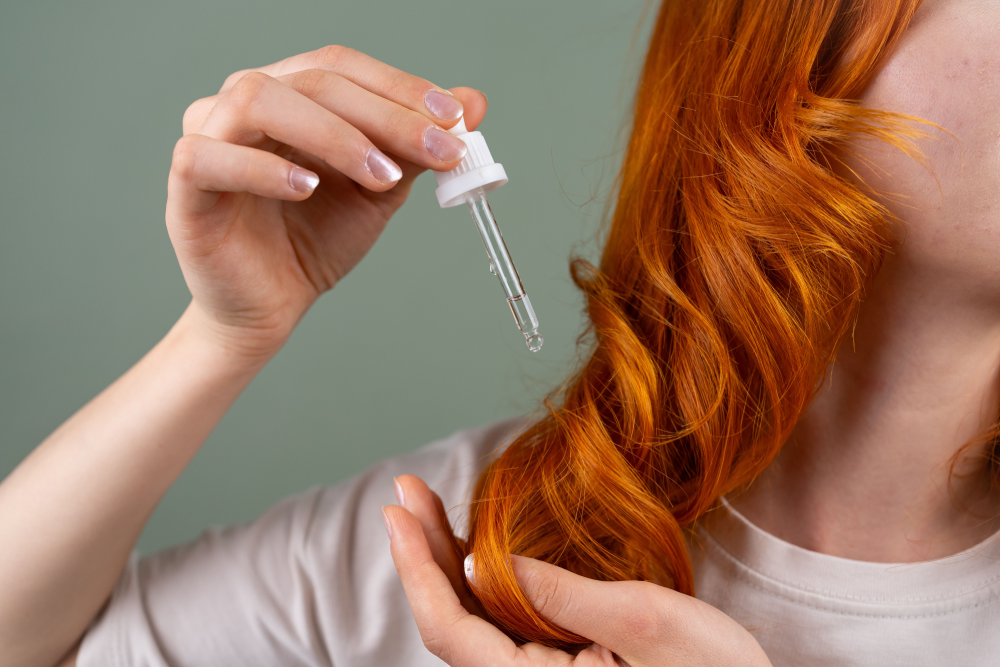
- Most people apply minoxidil wrong. The dropper sends most of the liquid onto the hair shaft, not scalp skin, and voilà…the result is grease and product waste.
- Rootique DUO is a minoxidil applicator that converts your minoxidil or any scalp tonic into a fine mist and delivers it right onto the scalp. It beeps every 1ml so you’re never guessing the dose, and it’s lab-tested at 3.5x better absorption than a standard dropper.
- You can increase your hair shaft thickness in 24 weeks by doing consistent scalp massages, 4 minutes a day.
- Iron, vitamin D, and zinc deficiencies are documented causes of shedding. Supplements only help if you have a deficiency, so get bloodwork first.
1. Use Minoxidil with the Right Applicator

*Before you start using minoxidil it’s best to talk to your doctor or dermatologist first.
Minoxidil is the most effective over-the-counter medication to grow your hair, but it only works if you apply it correctly. And messing up with manual application, especially if you’re new to it, happens more often than not. If the medication doesn’t reach your scalp and gets stuck on your hair, you’re just wasting product and getting nothing out of it.
For maximum effectiveness and hassle-free application, reaching for a micro-mist scalp serum applicator like Rootique makes a whole lot of sense. With it, you can get on with your daily application in just under 15 seconds, without any facial runoff, greasy hair, or white flaky residue. Adding to this, Rootique’s IntelliMist technology converts your tonic or minoxidil into a 0.0005mm mist, which absorbs 3.5x better than with a standard dropper.
The device parts your hair with its parting heads and opens a path to shoot the mist right on top of your scalp by the press of a button, without touching your hair shaft. Another great benefit of using a minoxidil applicator is that it beeps every 1ml so you don’t guess on the dose and accidentally overapply on one area.
2. Massage Your Scalp Every Day

Yes, this does help. Just a heads up that scalp massages help with thickening rather than density or regrowth. In a 2016 study nine healthy men did scalp massages for 24 weeks and by the end the shaft thickness of their hair increased from 0.085mm to 0.092mm.
It’s completely free, so it won’t break the bank. Use your fingertips with moderate pressure (not nails) and massage your scalp areas where you see thinning with circular motions for 4 minutes a day. That’s it. The idea behind this is that you’re stimulating the blood vessels under your skin, which boosts blood flow and your hair follicles get more oxygen and nutrients.
3. Feed Your Hair Follicles

When nutritional deficits hit, your hair is usually the first to suffer. As your body prioritizes where nutrients go, hair production gets cut because those nutrients need to reach the vital organs first.
The nutrients with the strongest documented links to hair shedding are iron, vitamin D, and zinc. So a deficit in one can stall hair growth and cause shedding. And as for dosage — that's a conversation with your doctor after bloodwork. The right amount depends on how deficient you are, and iron in particular can cause issues if you supplement without needing to. So let’s not blind-buy any supplements before you do that.
On the food side, you’d want to focus on protein, omega-3 fatty acids, iron, B vitamins. Foods that are rich in these are salmon, eggs, leafy greens, beans, and, of course, nuts. Eating closer to a Mediterranean diet checks out most of these boxes without you having to reach for a supplement.
4. Switch to Sulfate-Free Shampoos (if you haven’t already)

If you disrupt the microbiome of your scalp consistently with sulfate-heavy shampoos, you’re not doing your follicles any favor.
So let’s avoid sulfate-heavy shampoos that strip your skin of its natural oil production. Another culprit that kills your microbiome is heavy product buildup from dry shampoo or thickening sprays, and over-washing. In other words, keep these to a minimum, too.
And as for washing, ideally, you want to aim for two to three washes per week with a gentle, sulfate-free shampoo. It’s a simple routine tweak that goes a long way.
5. Protect Your Hair from Heat and Friction

A very common misconception you’re likely to hear every now and then is that hot tools affect growth at the root. But that’s not entirely true. What they do is cause breakage mid-shaft, which makes your hair appear to stop growing.
Apply a heat protectant serum on damp hair before you touch hair with any heat source. Another thing to keep in mind is brushing. Use a boar bristle brush to distribute natural scalp oils down the shaft. This reduced dryness and mechanical stress. Also, make sure to detangle from the ends up, not the other way around. And, of course, avoid plastic bristle brushes because they create static and snap strands.
6. Swap Your Cotton Pillowcase with a Silk or Satin One

This isn't going to sound very flattering, but there's a good chance you're sleeping on a cotton pillowcase. Cotton's texture creates friction against your hair shaft all night. That's more than enough to rough up the cuticle and snap off strands that would've otherwise stayed intact.
When your hair is already thinning, finer, miniaturized strands are more vulnerable to mechanical stress than thick hair is, so the nightly friction only compounds the problem.
Swapping your pillowcase with a silk or satin one will reduce that strain considerably. Again, it doesn't grow hair, but it stops you from losing it while you sleep. The long-term results of that are well worth it.
7. Consider Red Light Therapy

Red light therapy for hair loss is another FDA-cleared approach for treating androgenetic alopecia, alongside minoxidil and finasteride. A 2013 randomized controlled trial found that men who used a 655nm laser device grew hair 39% faster over 26 weeks compared to a sham or placebo device.
Here’s how it stimulates growth: the wavelength of the red light penetrates the scalp and stimulates follicle cells at a mitochondrial level, which extends the active growth phase of your hair.
For at-home use, you'll need a dedicated FDA-cleared device, like laser caps or laser combs. You wear or run it over your scalp for about 20 to 30 minutes a few times a week, and the light does the rest.
That said, red light therapy for hair loss works best as part of a treatment protocol, not as a standalone. If you're already using minoxidil and want to add a complementary layer that doesn't involve another medication, this is a legitimate option.
8. Get Regular Micro-Trims

Trimming does not make hair grow faster, but what it does is remove split ends before they travel up the shaft and cause breakage, which is what makes a lot of people feel like their hair isn't growing when it actually is.
The standard rule of thumb is to get three to four dustings per year. You can take off about an eighth of an inch at a time. You lose almost nothing visible and you remove the structural damage that would cost you length later.
Final Thoughts
Start with what you can do today. Take a drive to HomeGoods, swap your cotton pillowcase with a silk one, and grab a sulfate-free shampoo if you haven't already. Then get bloodwork to check your iron and vitamin B and D levels, talk to your doctor, and get ready for a lifelong adventure with minoxidil. Reach for a good minoxidil applicator to save nerves and time.
Frequently Asked Questions
How long does it take to see results from minoxidil?
Two to three months, right after the initial “shedding period.” But the full effect can take up to a year. Inconsistency is the most common reason treatments don't get the chance to work.
Can hair grow back after thinning?
It depends on the cause. If the thinning is triggered by stress, illness, or hormonal shifts like postpartum, hair usually recovers on its own once the trigger is resolved. But as for androgenetic alopecia, the follicles are miniaturizing over time, and minoxidil can slow or partially reverse that process.
Does minoxidil work for hair loss?
Yes, for the right type of hair loss. Minoxidil is FDA-approved for androgenetic alopecia, which is pattern hair loss in both men and women. Studies show roughly 40% of participants see regrowth, and a larger portion see stabilization. It doesn’t work for every cause of hair loss, and results vary significantly between individuals.
What vitamins and supplements help with hair growth?
Iron, vitamin D, and zinc. If you are deficient in any of these, correcting that deficiency can reduce shedding. Before adding supplements, do bloodwork and consult your doctor.
Does scalp massage help with hair growth?
There is some evidence that it does. Mechanical stimulation stretches dermal papilla cells, which are involved in hair growth. It’s not a replacement for medical treatment in cases of significant hair loss, of course, but as a low-cost addition to an already-existing routine.
Is red light therapy effective for hair loss?
Yes. Low-level laser therapy (LLLT) is FDA-cleared for androgenetic alopecia, and a 2013 study found that men who used a 655nm laser device grew hair 39% faster over 26 weeks compared to a placebo device. The wavelength stimulates mitochondrial activity in follicle cells, which extends the active growth phase.
Share:
When Should You Apply Hair Serum: Wet Hair, Dry Hair, or After Washing?
Minoxidil Application Frequency: How to Build a Consistent Routine